
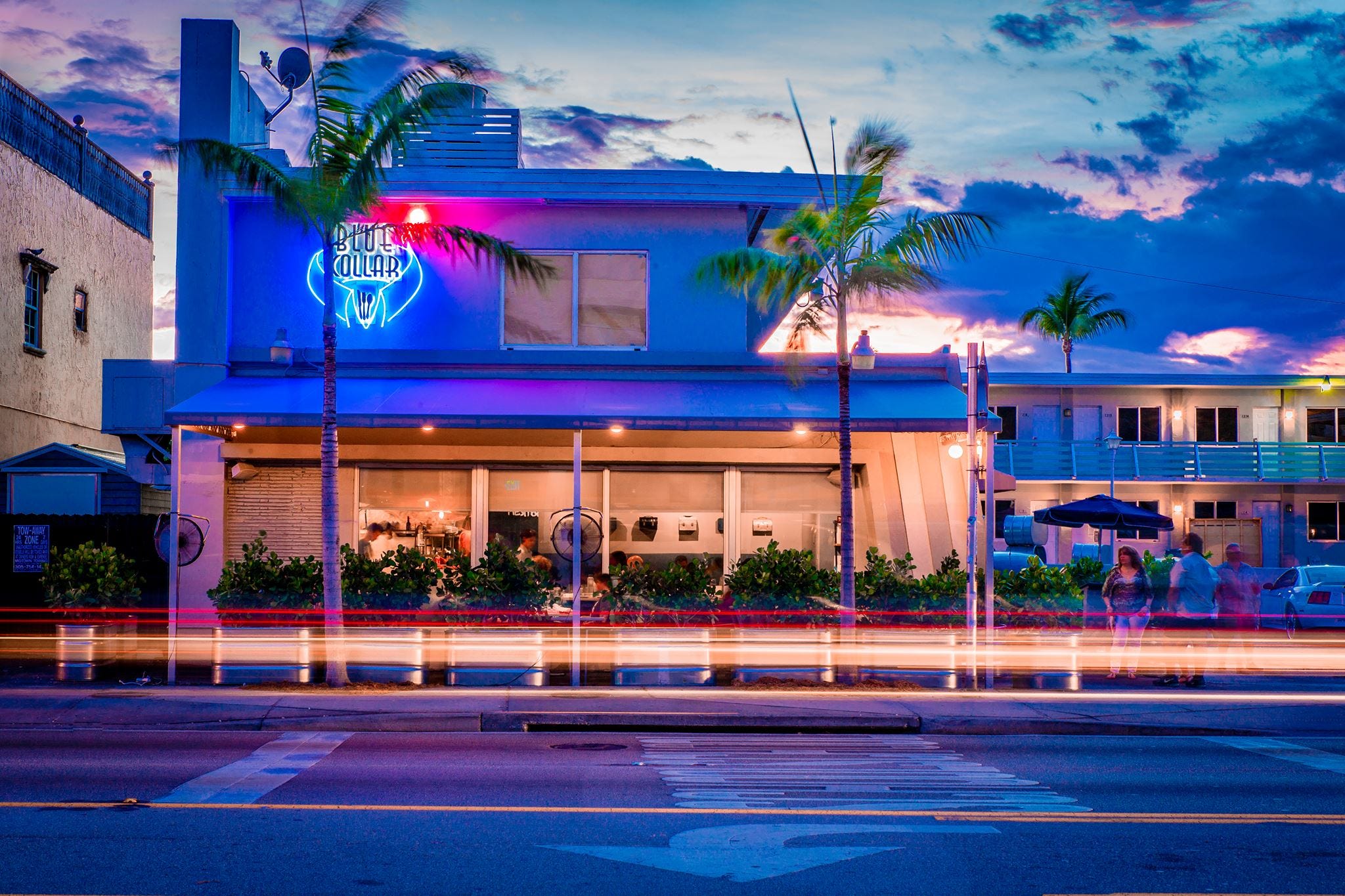
Blue Collar's Closing Hits Different. This is Why
Maybe it needed a Members Only Club

News of beloved Miami restaurant closures are as routine as a baseball score now. An occurrence as unremarkable as an afternoon thunderstorm. A loss as expected as a terminal great-grandparent. So it reasons a pillar of the community closing its doors shouldn’t raise any more eyebrows than a rush hour crash on the Palmetto. But when Blue Collar called it quits, the Miami restaurant world shook.
Because Blue Collar wasn’t just a restaurant, it was a building block upon which Miami’s food scene was built.
And it was built, like the rest of Miami, with sweat and hustle.
Blue Collar was the product a chef whose prospective father-in-law didn’t want his daughter marrying a “blue collar cook,” its name, like Lynard Skynrd, a final “fuck you” to the people who said he couldn’t. Danny Serfer was a native, a born-and-raised Miamian who I like to think grew up swimming canals in Palmetto Bay.
Blue Collar was Food for Miami People
The food wasn’t fancy, but it represented the cultures of this city at their most delicious – spicy Griot from Haiti: Cuban sandwiches and plantains; oxtail from Jamaica; latkes and brisket from New York. No matter where you came from, sitting down at Blue Collar was sitting down at your mother’s dinner table.
That’s why Blue Collar felt like ours. It was food for the people who kept the city’s heart beating when the beautiful people moved on to the Hamptons and Saint Tropez. The real ones who worked at bars and restaurants and cruise line corporate headquarters for salaries that would be illegal if you broke them down by the hour.
It was the restaurant you took condescending out-of-towners who only ate at Mr. Chow, to show them our city could make world-class food without help from London or New York. It showcased Miami’s culinary talent in the most unpretentious of settings, hidden in a hotel whose most frequent guests rented by the hour, and sometimes left feet first.
Nobody went to Blue Collar to be seen. They went to eat, and hope their car was still there when they were finished.
This New Miami is not Blue Collar
But then, as it always does, Miami began to change. Only this time, the change wasn’t built on sweat and hustle – it was built on private equity and venture capital, bringing with it the kind of inevitable money that destroys a city’s creative fiber.
Now, instead of new restaurants run by talented, independent chefs, we get imports run by “hospitality groups” whose idea of hospitality is saying No to as many people as possible. At Blue Collar, the answer was always Yes.
“That’s what you get when you make food for fat people,” one of my co-founders said when we got the news. But Blue Collar isn’t a casualty of diet drugs, or Miami’s comical attempt at rebranding itself as Ojai on the Atlantic. After all, we brag about sitting down to a 15-course wagyu omakase, and take endless photographs of a $100 hot dog. Indulgence is still in, but only if it comes topped with caviar and gold flakes.
Its closing came on the heels of a Wall Street journal article telling the world how the super-wealthy have moved into Miami and priced out the people who built it. More Members Only. Less Blue Collar.
And that is why this closing hurts so much. Because as long time locals, we’re holding on to anything that’s ours like a palm tree while the Miami we knew is blown away in a hedge fund hurricane. And in Blue Collar, we’re losing something that was distinctly ours, like we’re losing our jobs, our homes, and our city to money nobody asked for. Miami will move on, and so will Danny Serfer. But like when they tore down the Orange Bowl, it feels like when Blue Collar closed it took a piece of Miami’s soul with it.


Sad to see both his amazing dining spots closed! Mignonette-best scallops, seafood, sides, salads, wine & Blue Collar 😭😂😭im signed up to dine at the arena.
Had to come over here to leave a comment as I cry 😭😭😭